ACCESS
Care within reach.
Essential period care available in the places people already are.
WHY ACCESS MATTERS
Periods do not always arrive when expected.
Enquire with LAYN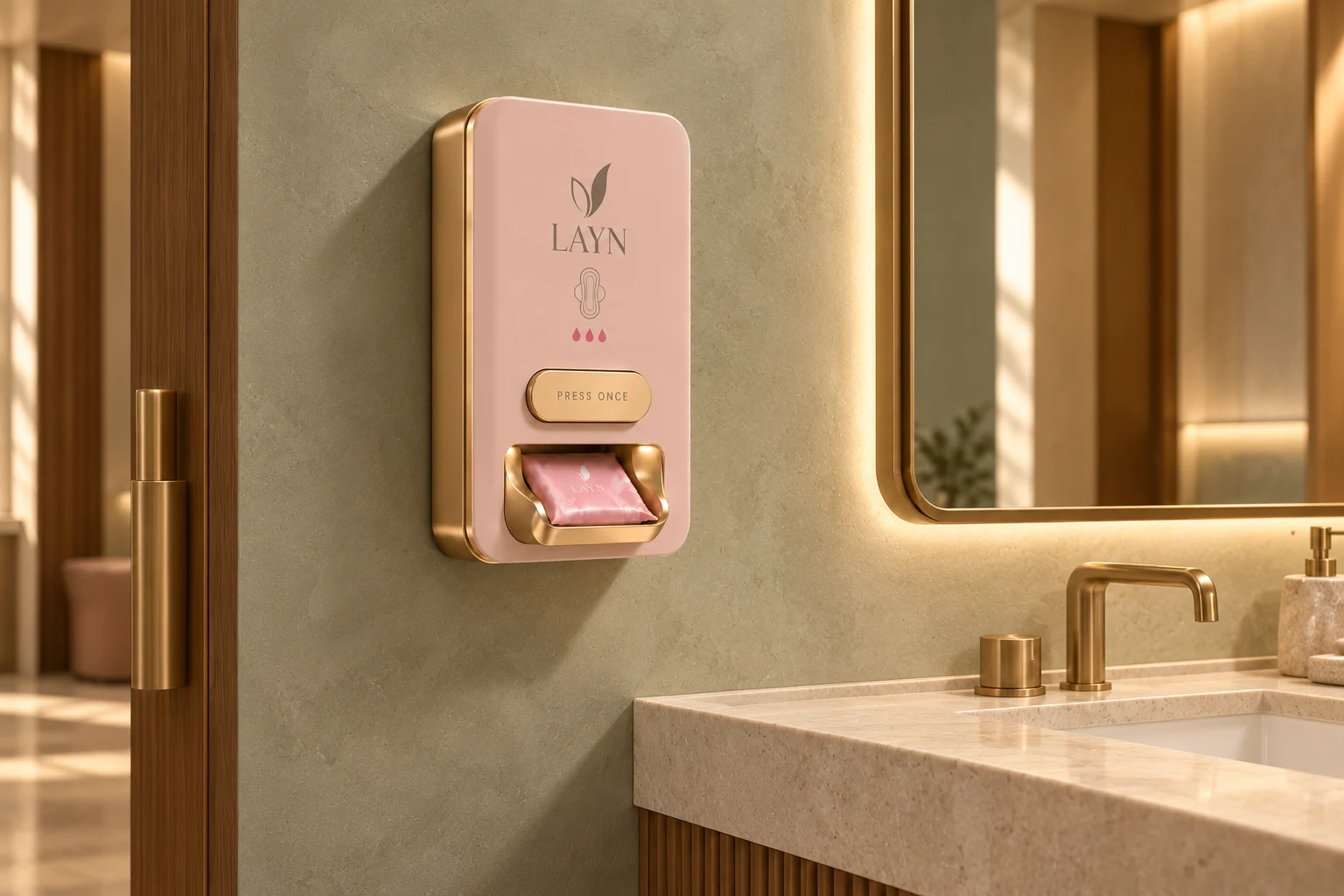
And even when they do, the product someone needs may be somewhere else — at home, in another bag or simply out of reach.
LAYN focuses on one practical part of the menstrual experience:
making essential period care available when and where it is needed.
THE GULF CONTEXT
Among women surveyed in Ajman, UAE
59.8%
reported difficulty accessing period products on campus.
68.3%
had borrowed a pad or tampon from a friend, co-worker or stranger.
84%
believed period products should be freely available in educational institutions.
Research findings relate to the population studied and should not be interpreted as global prevalence estimates.
The findings highlight a practical access gap within environments where people spend a significant part of their day.
LAYN is designed around that gap.
THE SAUDI CONTEXT
399students · three schools
A 2025 study involving 399 students across three secondary schools in Riyadh examined a menstrual-health education programme.
Its analyses associated material preparedness and supportive facilities with aspects of menstrual-health management and reported academic participation. The study did not test a dispenser or establish that product access alone improves academic performance.
Research from Riyadh reinforces the broader importance of preparedness and supportive environments during menstruation.
LAYN addresses one practical element of that wider experience: making essential period care available when it may be needed.
Riyadh, Saudi Arabia · Cureus · 2025Research across Saudi Arabia has also identified gaps in menstrual preparedness and knowledge.
A 2024 survey of 3,471 women examined readiness, beliefs and practices, including preparedness for the first period.
This is supporting context, not direct evidence about access to products in public environments or the effectiveness of dispensers.
International Journal of Women’s Health · 2024A WIDER PICTURE
The findings suggest that many moments of need are about preparedness and availability — not only affordability.
Reported reasons for using Purdue University’s period-product programme · United States
43.2%
used campus-provided period products because they did not have products with them.
33.4%
used them because their period arrived earlier or later than expected.
5.2%
identified financial constraints as their reason for using the programme.
OUR APPROACH
ACCESS
Essential period care available in the places people already are.
DIGNITY
Discreet access without having to explain, search or leave.
PREPAREDNESS
Because periods — and everyday life — do not always follow a plan.
RELIABILITY
A considered approach to capacity, dispensing and replenishment helps make access useful over time.
A thoughtful amenity for an unexpected moment.
Essential care available within the campus environment.
A more considered employee environment.
Accessible care within spaces built around wellbeing.
Prepared for every guest.
LAYN
Thoughtful spaces anticipate what people may need.
LAYN brings that same principle to period care.
Research presented by LAYN reflects the specific populations, settings and methodologies of the cited studies. Associations reported in observational research should not be interpreted as proof of causation.
LAYN does not claim that product access alone produces medical, academic or workplace outcomes.
LAYN focuses on one practical objective: making essential period care more accessible when and where it may be needed.
Ajman, UAE · 2025
Cross-sectional convenience sample at Gulf Medical University and Thumbay University Hospital. Percentages shown refer to female participants and follow the detailed Results section; response counts vary by question. The abstract gives a different borrowing figure (around 73%); the detailed Results report 68.3%.
Read the original studyRiyadh, Saudi Arabia · 2025
A pre–post menstrual-health education study among students aged 13–18. Associations involving preparedness and supportive facilities do not establish that dispensers improve academic outcomes. The study did not evaluate a LAYN product.
Read the original studySaudi Arabia · 2024
Cross-sectional online survey using convenience sampling. Examined readiness, beliefs and practices, including preparedness for the first period. It did not measure public-restroom product access or dispenser effectiveness.
Read the original studyPurdue University, United States · Online 2025 · Journal issue 2026
Evaluation of a university period-product programme. The percentages and sample size are reported in the publisher’s abstract. Published online on 30 January 2025, in the March 2026 issue. Findings describe this programme’s survey population.
Read the original study